KINTSUGI & PSALM 31

Kintsugi is a Japanese restorative art practice. Despite its popularity and spiritual significance in Japan, it is most likely an unfamiliar word. "Kintsugi" comes from two phrases- "kin" meaning golden and "tsugi" meaning rejoining. Together, the word is a literal translation of the art practice itself, in which broken pottery is repaired with lacquer and gold paint. Convenience has led to a universal mentality to replace broken items, rather than repairing them. This is especially easy to do with services such as Amazon prime that can ship the new item before sundown; however, Japanese tradition continues to value the significance of original pieces.
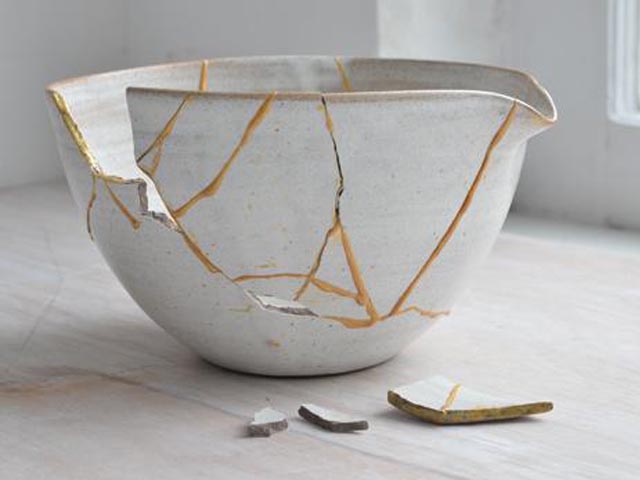
Why do I bring up this Japanese practice? It is a truly fascinating process, but also heavily related to our faith. Below is a fraction of Psalm 31 taken from lines 11-13, which initially sparked by connection between Kintsugi and Christianity:
The writer, David, describes himself as becoming like broken pottery. This is very much a literal connection to Kintsugi, but also embodies the greater intentions of God. It is said that if you want to see the greatest crowd of sinners, step into a church and not a jail. This is because God calls the sinful and broken to him, not those of perfection. His house is full of sinners, those exemplifying broken pottery; however, He calls this crowd into his home in order to restore us to glory and righteousness. With each step we take toward faith, God rebuilds us into the sons and daughters He originally created for us to embody. We are not the only broken structures to be rebuilt in scripture. Jesus called for the temple- which took 46 years to build- to be destroyed and promised "I will raise it again in three days" (John 2:19), and God speaks of the rebirth of the wicked city Babylon. Both instances are metaphors for deeper significance (Jesus's resurrection and God's future kingdom coming to earth), but provide insight that God does not fear brokenness.
Kintsugi provides Japanese culture with a way to redefine wholeness while embracing imperfection. As Christians, we know that mortal wholeness can only come from knowing and having a relationship with God. In many ways, our brokenness provides an outlet of vulnerability to trust God; to trust that only He can mend the pieces of our suffering and embrace the growth we make. Though David feels like broken pottery, he continues in Psalm 31 to reassure his faithfulness: "My times are in your hands" (Psalm 31:15).

Be vulnerable to breakage, but also repair. God wants to restore you because he sees value, just as there is generational value to Kintsugi pieces. God outlines our flaws in gold too, but not for shame. He brings to light our faults to promote humility and empathy. Accepting brokenness rather than replacing it allows us to be non-consumptive in faith and being.

Comments
Post a Comment